
Arrest Warrants in Alpena County
An arrest warrant is signed criminal process. It tells a peace officer or another authorized person to arrest the one named and bring that person before a judicial officer. Michigan Court Rule 6.102 sets the minimum contents. The document must identify the accused, describe the offense, command the appearance, and carry the court's signature. No blank orders get signed. Issuance reflects the court's conclusion that probable cause exists to proceed on a charge. The case still has to move through arraignment, bond, and the ordinary court process in Alpena County. When the circumstances do not justify an arrest warrant, the court may issue a summons instead. Note: only a peace officer or legally authorized person may execute an Alpena County arrest warrant.
How an Arrest Warrant Starts in the 88th District Court
Criminal cases in Alpena County usually open in the 88th District Court. The charge might later become a felony. That does not change where the file starts. The court issues arrest and search warrants, handles misdemeanor and felony arraignments, sets bail, accepts bond, and presides over preliminary examinations, so it is the first place to ask about a new charge. Under MCR 6.102, the court issues a summons rather than an arrest warrant unless listed circumstances justify custody. Those reasons include an assaultive or domestic-violence complaint, doubt that the person will appear, a public-safety risk, or a prosecutor's request. That is a state rule. It does not explain any single Alpena County warrant. A warrantless arrest works differently. MCL 764.1c lets a magistrate review reasonable cause and then issue a warrant or endorse the complaint. That step is about process only. It says nothing about the strength of a charge.
What an Alpena County Arrest Warrant Contains
An Alpena County arrest warrant carries the fields a court and an officer need to act. The public sees only some of them. The list below describes those categories, not a promise that each one appears in a public search.
| Case Number | The court's identifier, for example case number copied exactly from your notice. |
|---|---|
| Charge or Offense | The offense as charged, with its statutory classification. |
| Issuing Court | 88th District Court, or the 26th Circuit Court after bindover. |
| Issue Date | When the judge or magistrate signed the warrant. |
| Interim Bail or Bond | Any amount and type specified on the warrant where permitted by law. |
| Serving Agency | The office directed to execute the order. |
| Status | Active, served, returned, recalled, or removed from LEIN. |
The complaint or affidavit behind a charge is a separate document in Alpena County. Its access rules differ from the warrant itself.
Complaint, Affidavit, and Probable Cause
Every Alpena County arrest warrant rests on a sworn complaint and a probable-cause review. The prosecutor or an investigating agency presents the facts. Then a judge or magistrate weighs probable cause and decides whether to issue process. A search warrant looks similar at the front end. Instead of an arrest, though, it authorizes a search of a place or thing. Do not expect the affidavit. Michigan law holds a search-warrant affidavit in a court file nonpublic until the 56th day unless a suppression order extends confidentiality. That rule concerns search warrants. Still, it reminds an Alpena County reader that a public case display will not show every document behind a charge.
What the court needs: A warrant must identify the accused, describe the offense, command an appearance before a judicial officer, and be signed by the court under MCR 6.102.
How Alpena County Arrest Warrants Are Served
Serving a warrant is a law-enforcement act. An officer locates the person named, makes the arrest, and delivers the person before the designated court. The process then goes back to the issuing court. The court records the execution or the attempt. That return is process, not the charge's final outcome. Several agencies can serve. The Alpena County Sheriff handles court process and county matters, while the Alpena Police Department handles city arrests and citations. The Michigan State Police post can execute or assist on state warrants. Michigan law also lets a directed officer pursue a person into another county, so a local warrant can be served far from Alpena. After an arrest, MCR 6.104 requires an arraignment without unnecessary delay, subject to the rule's procedure. Bond and release terms come from the court.
The Pre-Bindover and Post-Bindover Record Split
Felony cases can change courts. The record follows the case. Before bindover, the 88th District Court holds the file and handles the preliminary examination in Alpena County. After bindover, the 26th Circuit Court takes the case, and the County Clerk keeps the circuit file. Check one office only. The answer can come up short. Alpena County also sits in a two-county circuit with Montmorency County, which matters for circuit administration and scheduling. Criminal motion days in Alpena generally occur twice monthly on Mondays. The circuit scheduling line is the right contact for a post-bindover date. So ask one question first: has this case been bound over? That answer routes everything else.
Arrest Warrant vs Summons vs Bench Warrant
Three documents can bring a person before a Michigan court, and they are not interchangeable. A summons orders an appearance without authorizing an arrest. An arrest warrant authorizes custody on a charge. A bench warrant answers a missed obligation in a case already before the court. The table below separates them.
| Point | Arrest Warrant | Summons | Bench Warrant |
|---|---|---|---|
| What starts it | Probable cause on a charge | Probable cause, with an appearance notice instead of custody | A missed court obligation |
| Custody authority | Yes | No | Yes |
| Issued by | Judge or magistrate | Judge or magistrate | The judge holding the case |
| Typical first step | Arrest, booking, arraignment, bond | Appear on the scheduled date | Appearance, compliance, or recall |
You may hear the term "capias" if you read up on other states. Alpena County paperwork does not use it; the local terms are arrest warrant, bench warrant, order for arrest, and order to apprehend.
Search Warrant vs Arrest Warrant
A search warrant is not about a person at all. It lets an officer search a described place or thing and seize described property. Under MCL 780.654, the warrant must describe the place and the property, state probable-cause grounds, or attach the affidavit. That supporting affidavit stays nonpublic for a period in Alpena County practice. So a public case display will not let you read it. If your real question is whether a warrant carries your name, you are asking about an arrest or bench warrant, not a search warrant. Alpena County residents get that answer from the issuing court. The court, not a search warrant, is the self-check tool here. Treat any blank display on the affidavit as simply what the rule allows, and take your question straight to the clerk of the court that issued the warrant.
Federal and Michigan Warrants Are Different
Federal warrants work on a separate track. Alpena County sits in the Eastern District of Michigan for federal cases. A federal magistrate judge issues a federal arrest warrant on a complaint or after an indictment, and the U.S. Marshals Service serves the federal process. That warrant is not the same as one held by the 88th District Court or the 26th Circuit Court. The county jail does not control federal release either. PACER searches federal dockets, but it is not a live federal warrant register. A sealed complaint or warrant may not appear until it is unsealed or served, so a blank docket proves nothing. Never report to the county jail on a suspected federal matter. Confirm instructions first with the federal court or the Marshals Service. The U.S. District Court for the Eastern District of Michigan shows the federal court structure that covers Alpena County.
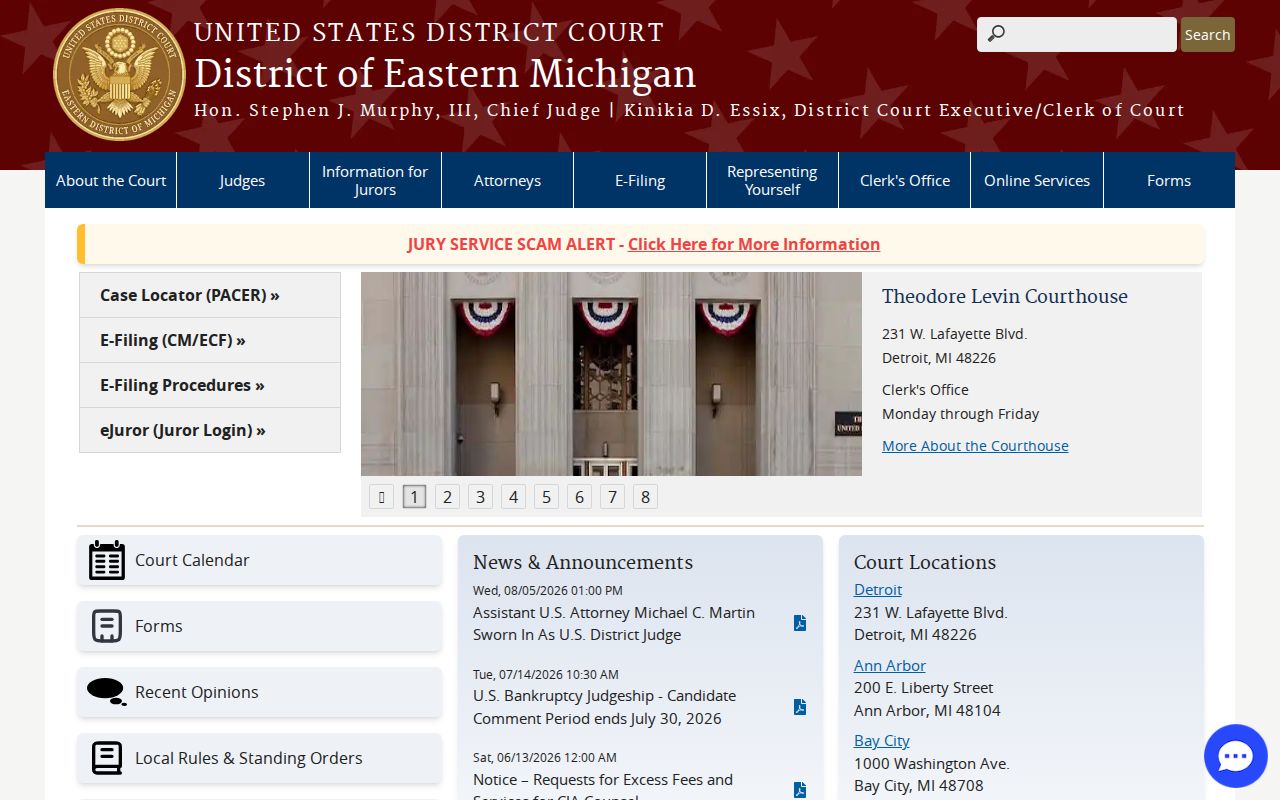
Federal process runs through a different court and a different serving agency than an Alpena County arrest warrant. The PACER search and account interface is a docket tool, not a federal warrant register.
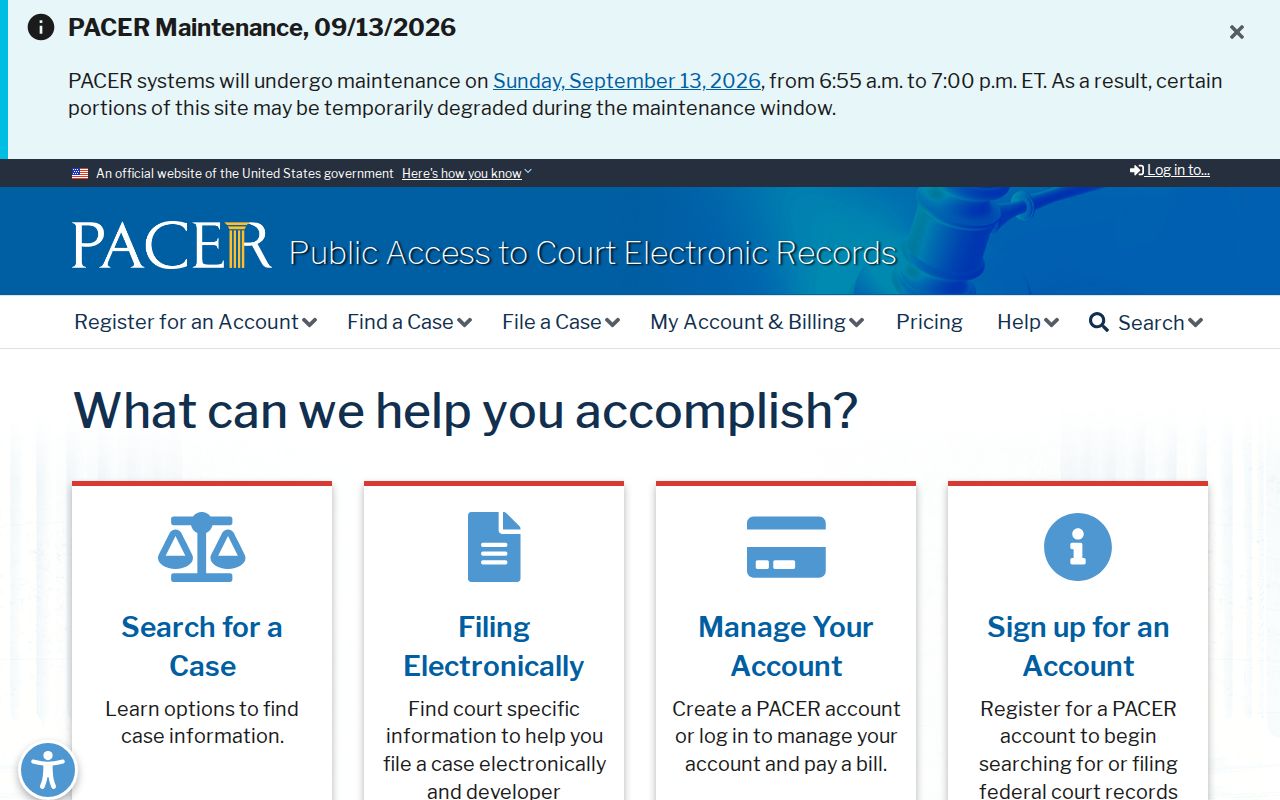
A sealed federal warrant can be missing from that display, so a blank Alpena County docket search proves nothing about federal matters.
What to Do If There Is a Warrant for You
A confirmed Alpena County arrest warrant in your name calls for a lawyer, not a walk to the jail. Call a licensed Michigan attorney first. Ask about a voluntary appearance, an interim bond, or a motion to recall. Ask the court where it wants a person to report if custody is required. No office here promises a walk-in surrender program at any hour. Keep your paperwork together: the court name, the case number, the warrant label, the bond term, the next hearing, and any receipt you collect along the way. Confirm each step with the court itself. A caller or a third-party website is not the place to lean for Alpena County warrant details. Recall and quash decisions rest with the issuing court, so route every question there.
Get counsel first: An attorney can arrange a voluntary appearance, an interim bond, or a recall motion. Do not assume that showing up at the jail produces immediate release.